Introduction: AI Is Becoming Part of Every Industry
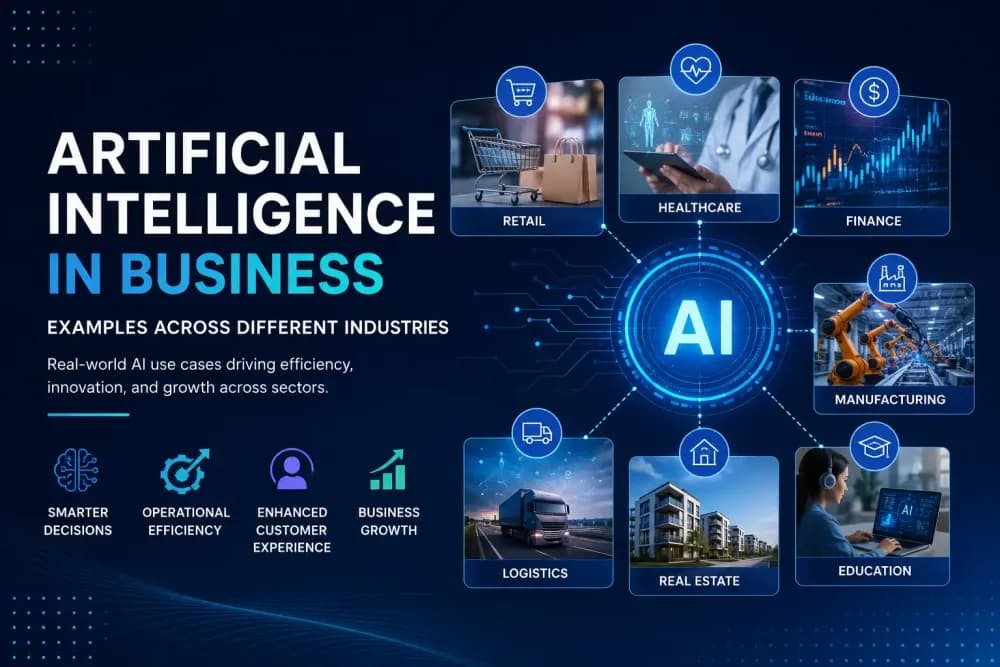
Artificial intelligence is no longer limited to tech companies. Today, businesses in almost every industry use AI to solve real problems. They use it to save time, improve decisions, and create better customer experiences.
With enterprise AI solutions and AI software development services, companies can build smart systems that match their daily operations. As a result, AI is becoming a practical tool for business growth, not just a future trend.
Why AI Matters Across Different Industries
Every industry has its own challenges. Retail companies need better customer insights. Healthcare providers need faster support. Finance companies need stronger risk control. Manufacturing companies need smoother operations.
AI helps each industry in a different way. However, the main goal stays the same. Businesses want better speed, better accuracy, and better outcomes. This is why enterprise AI solutions are becoming more important across sectors.
AI Solves Industry-Specific Problems
A generic tool may not work for every business. Each company has different data, workflows, customers, and goals. That is why custom AI matters.
AI software development services help businesses create solutions for their exact needs. For example, one company may need AI for demand forecasting. Another may need AI for fraud detection or customer support automation.
AI in Retail and ECommerce
Retail and eCommerce brands use AI to understand customers better. AI can study browsing behavior, purchase history, and product interest. Then, it can recommend the right products at the right time.
This improves the shopping experience. It also helps businesses increase sales and reduce abandoned carts. In addition, AI can support inventory planning, pricing, and customer service.
Personalized Product Recommendations
Product recommendations are one of the most common AI examples in eCommerce. When a customer views a product, AI can suggest related items. These suggestions can be based on behavior, trends, and past purchases.
This makes shopping easier for customers. It also helps brands promote products more effectively. As a result, businesses can improve both customer satisfaction and revenue.
AI in Healthcare
Healthcare businesses use AI to improve patient support, reduce admin work, and manage large amounts of data. AI can help schedule appointments, organize records, and support faster diagnosis workflows.
It can also help healthcare teams identify patterns in patient data. This allows doctors and staff to make more informed decisions. However, human care still remains essential.
Smarter Patient Support
AI-powered chatbots can answer common patient questions. They can share appointment details, guide users through basic information, and reduce pressure on front-desk teams.
At the same time, AI can help clinics and hospitals manage follow-ups. It can send reminders, track patient journeys, and support better communication. This improves the overall patient experience.
AI in Finance and Banking
Finance is one of the strongest areas for AI adoption. Banks, fintech companies, and insurance providers use AI to detect fraud, assess risk, and improve customer service.
AI can review thousands of transactions in real time. It can detect unusual patterns and flag suspicious activity. This helps financial businesses protect customers and reduce losses.
Fraud Detection and Risk Analysis
Fraud detection is a powerful example of AI in finance. AI can identify abnormal spending, login behavior, or payment activity. It can act faster than manual review teams.
Risk analysis is another major use case. AI can review credit history, financial behavior, and market signals. This helps lenders make better decisions with more accuracy.
AI in Manufacturing
Manufacturing companies use AI to improve production, reduce downtime, and manage quality. AI can monitor machines, detect faults, and predict maintenance needs before problems happen.
This helps factories run more smoothly. It also reduces waste and improves product quality. With enterprise AI solutions, manufacturers can connect machines, teams, and data into one smarter system.
Predictive Maintenance
Predictive maintenance helps businesses avoid unexpected breakdowns. AI studies machine data such as temperature, vibration, and performance levels. Then, it warns teams when a machine may need attention.
This prevents costly downtime. It also helps companies plan maintenance at the right time. As a result, operations become more reliable and efficient.
AI in Logistics and Supply Chain
Logistics companies deal with complex movement. They manage vehicles, warehouses, routes, orders, and delivery timelines. AI helps make these processes more organized.
AI can improve route planning, demand forecasting, and warehouse management. It can also help businesses respond faster to delays, stock issues, and changing customer demand.
Smarter Delivery and Inventory Planning
AI can suggest better delivery routes by studying traffic, distance, weather, and order priority. This helps reduce fuel costs and improve delivery speed.
It can also support inventory planning. AI can predict which products may sell faster and which ones may slow down. This helps businesses avoid overstocking and stockouts.
AI in Real Estate
Real estate businesses use AI to improve property search, lead management, and pricing insights. AI can help buyers find properties that match their needs faster.
Real estate businesses use AI to improve property search, lead management, and pricing insights. AI can help buyers find properties that match their needs faster.
Property Recommendations and Lead Scoring
AI-powered property recommendations can make the search process easier. Instead of showing random listings, AI can show options that match the buyer’s interests.
Lead scoring also helps real estate teams. AI can identify which leads are more likely to convert. This allows sales teams to focus on high-value prospects first.
AI in Marketing and Advertising
Marketing teams use AI to improve campaign performance. AI can study audience behavior, test ad variations, and suggest better targeting. This helps brands spend their budgets more wisely.
AI can also support content planning, email personalization, and customer segmentation. With AI software development services, businesses can build custom marketing tools that fit their brand, audience, and sales process.
Better Targeting and Campaign Optimization
AI helps marketers understand who to target and when to reach them. It can analyze customer activity, interests, and engagement patterns.
This makes campaigns more relevant. It also reduces wasted ad spend. As a result, businesses can improve conversions and build stronger customer relationships.
AI in Education and Training
Education platforms and training companies use AI to create better learning experiences. AI can personalize lessons, recommend learning paths, and track student progress.
This helps learners study at their own pace. It also helps teachers and trainers identify where students need support. Therefore, learning becomes more flexible and effective.
Personalized Learning Paths
Every learner is different. Some students need more time. Others move faster. AI can adjust learning content based on performance and behavior.
This creates a more helpful learning journey. It also allows education businesses to improve outcomes at scale.
How Businesses Can Start Using AI
Businesses should start by identifying their biggest problems. They should ask where teams waste time, where errors happen, and where better insights are needed.
After that, they should review their data and systems. Clean data is important for AI success. Without it, even the best tools may not perform well.
Start Small and Scale Gradually
A company does not need to use AI everywhere at once. It can begin with one use case. For example, it can automate customer support, reporting, lead scoring, or inventory forecasting.
Once the first project works well, the business can expand AI into more departments. With the right enterprise AI solutions and AI software development services, this process becomes easier and more effective.
Conclusion: AI Is Creating Smarter Industries
Artificial intelligence is changing how businesses work across industries. From retail and healthcare to finance, logistics, real estate, marketing, and education, AI is helping companies solve real problems.
It improves speed, accuracy, customer experience, and decision-making. More importantly, it helps businesses become more prepared for the future.
With strong enterprise AI solutions, companies can connect data and scale smarter systems. With reliable AI software development services, they can build custom tools for their specific industry needs. In the end, AI is not just a technology trend. It is a practical way to build better business operations across every sector.