Data Engineering
& Integration
Connect your data so your business can move faster
Consult an expert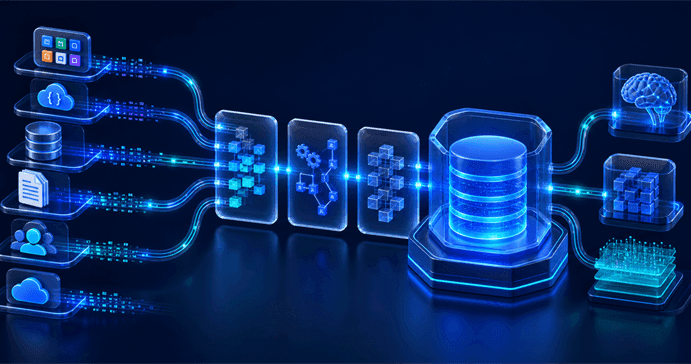
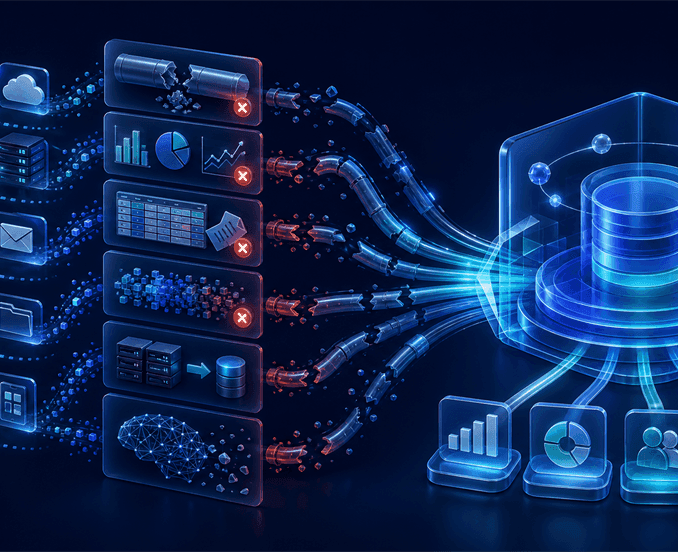
Most organizations do not have a data shortage. They have a data connection problem. Customer records, financial transactions, operational activity, documents, and reporting files sit in separate systems that do not speak to each other cleanly.
JBS brings that information together. We design pipelines, integrations, migration paths, warehousing foundations, and quality practices that make data easier to access, easier to trust, and ready for analytics, automation, and AI.
Identifying where data lives, how it flows, what breaks downstream, and which sources matter most.
Pipelines that extract, transform, load, validate, and refresh data into analytics-ready environments.
ETL or ELT patterns based on target architecture, data volume, and analytics requirements.
Connecting applications, APIs, databases, documents, CRM, ERP, and third-party tools.
Moving from outdated databases, spreadsheets, and legacy platforms into modern environments.
Structured repositories and data models that make reporting, analytics, and AI use easier.
Validation rules, reconciliation, transformation logic, and monitoring to increase trust.
Foundations for RAG systems, agentic workflows, automation, and predictive analytics.
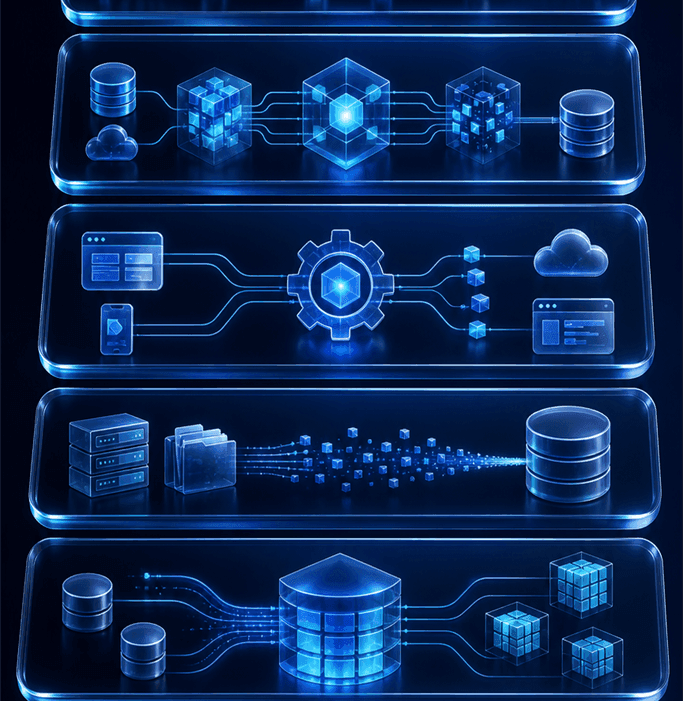
| Area | What it includes | Buyer value |
|---|---|---|
| Data integration | APIs, databases, files, cloud sources, business applications, CRM/ERP, and third-party data. | A more complete operating view with less manual data movement. |
| ETL/ELT pipelines | Extraction, transformation, loading, scheduling, validation, and refresh. | Reporting and AI systems supplied with timely, usable data. |
| Data migration | Source mapping, cleansing, transformation, validation, and cutover support. | Critical information moved into modern systems with less disruption. |
| Data warehousing | Data models, reporting layers, structured repositories, and metric-ready datasets. | Analytics that are easier to scale and govern. |
| Data quality | Profiling, quality rules, reconciliation, exception handling, and monitoring. | Confidence in dashboards, automation, and AI outputs. |
| AI-ready foundations | Structured context, governed access, and clean source connections. | AI systems working from company context, not disconnected raw data. |
JBS connected fragmented financial systems, documents, and transaction workflows through a RAG-enabled platform and integrated data layer.
Learn moreJBS connected enterprise knowledge sources and live retrieval into a unified assistant with role-based access and conversational analytics.
Learn moreJBS turned conversations, forms, and handwritten notes into structured submission workflows, cutting processing time by 76% and eliminating duplicate entry.
Learn moreJBS applied document intelligence and workflow automation to accelerate loss run collection and structured data handling for insurance teams.
Learn moreJBS converted visual chart information into structured datasets analysts could query, compare, and use downstream.
Learn moreJBS built vector-retrieval foundations that turn large document libraries into searchable, source-backed intelligence.
Learn moreWe inventory source systems, data owners, reporting flows, integration gaps, and downstream needs.
We review data quality, latency, security, governance, transformation needs, and AI-readiness gaps.
We define target architecture, integration patterns, data models, and pipeline logic.
We implement pipelines, integrations, transformations, warehouses, quality checks, and documentation.
We validate outputs with business users, test accuracy, set up access, and prepare dashboards or AI layers.
We monitor pipelines, resolve issues, extend sources, and keep the foundation aligned with change.

We solve the connection problem that blocks reporting, automation, and AI.

We migrate off legacy sources with less operational disruption.

We build quality and governance into the pipeline, not around it.

We prepare data specifically for AI use, not just reporting.
Designing, building, and maintaining the pipelines, integrations, repositories, and quality processes that make business data usable for reporting, analytics, automation, and AI.
Connecting data from multiple systems so it can be used together, through APIs, database connections, file ingestion, cloud sources, transformation logic, and validation.
ETL transforms data before loading it into a target. ELT loads first, then transforms inside the target platform. The right approach depends on architecture, volume, transformation needs, and goals.
Yes. We migrate from legacy applications, outdated databases, spreadsheets, and fragmented systems into modern platforms built for reporting, operations, and AI readiness.
Data that is clean, connected, properly structured, governed, secure, and available to the AI system through the right retrieval, integration, or workflow layer.
JBS designs and builds the pipelines, integrations, and foundations your teams and AI systems need.