Introduction: AI Is Changing How Businesses Think
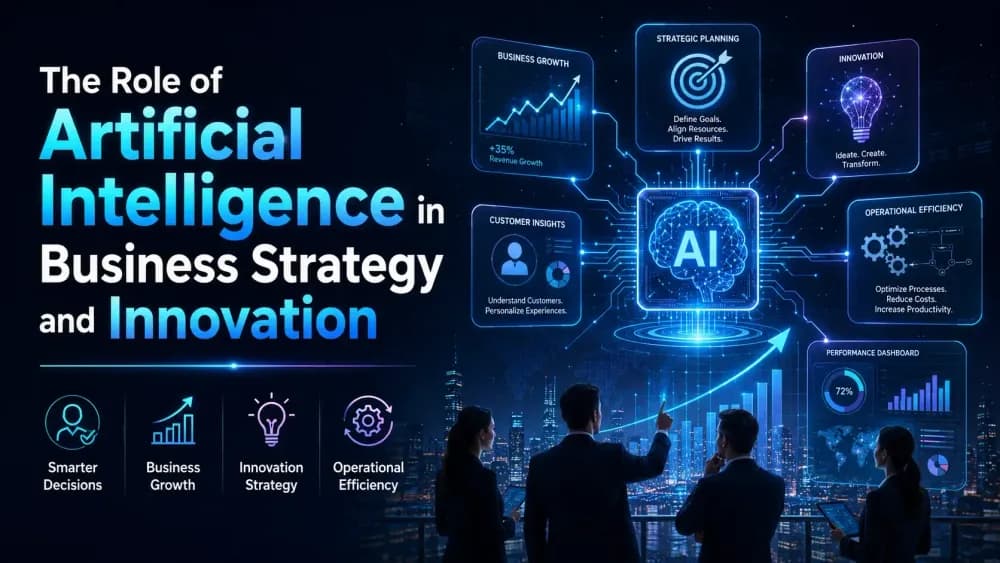
Artificial intelligence is no longer only a technical tool. It is now a major part of business strategy. Companies use AI to understand customers, improve operations, reduce costs, and create better digital experiences.
Today, businesses need more than basic automation. They need enterprise AI solutions and AI software development services that connect with real goals. As a result, AI is becoming a strong driver of innovation and long-term growth.
Why AI Matters in Business Strategy
A good business strategy helps a company decide where to go and how to grow. AI supports this process by turning data into useful insights. It helps leaders see patterns, risks, and opportunities faster.
With enterprise AI solutions, businesses can make decisions based on real-time information. They can study market trends, customer behavior, sales performance, and operational gaps. Therefore, strategy becomes more practical and more accurate.
AI Helps Leaders Make Smarter Decisions
Business leaders often make decisions under pressure. They need accurate data, clear reports, and fast analysis. AI can support this by processing large amounts of information in less time.
For example, AI can show which products are performing well. It can also highlight which customers may leave, which markets are growing, and which processes need improvement. This helps leaders act with more confidence.
AI as a Driver of Business Innovation
Innovation means finding better ways to create value. AI makes this easier. It helps companies develop new products, improve services, and create smarter customer experiences.
Instead of guessing what customers want, businesses can use AI to study behavior and feedback. Then, they can build solutions that match real needs. This makes innovation more focused and more useful.
Creating New Products and Services
AI can help businesses create new products faster. It can analyze customer pain points, review market gaps, and test ideas through data. This reduces guesswork and improves product planning.
For service-based companies, AI can also create new service models. For example, businesses can offer smart recommendations, automated support, predictive maintenance, or personalized digital experiences.
How AI Improves Operational Strategy
Operations are the backbone of every business. If operations are slow, the whole company suffers. AI helps improve workflows, reduce delays, and make teams more productive.
AI can automate repetitive tasks such as data entry, report generation, ticket routing, invoice checking, and inventory updates. This gives employees more time to focus on meaningful work.
Better Efficiency Through Automation
Automation is one of the most practical uses of AI. It helps companies complete routine tasks faster and with fewer errors. This improves speed, accuracy, and team performance.
AI software development services make this even more powerful. They help businesses build custom automation tools that fit their exact processes. As a result, companies can improve efficiency without forcing teams to change everything at once.
AI and Customer-Centric Strategy
Customers expect fast, personal, and smooth experiences. AI helps businesses meet these expectations. It can study customer journeys, identify needs, and support better communication.
For example, AI can recommend products, personalize emails, answer common questions, and predict customer issues. This helps businesses serve customers at the right time with the right message.
Personalization Builds Stronger Relationships
Personalization makes customers feel understood. AI can help companies personalize website content, product suggestions, support responses, and marketing campaigns.
This improves engagement and loyalty. It also helps businesses reduce wasted marketing spend because they can target the right audience with better accuracy.
The Role of Enterprise AI Solutions in Growth
As businesses grow, their systems become more complex. They may use multiple tools for sales, support, finance, marketing, and operations. Managing all this data can become difficult.
Enterprise AI solutions help connect these systems. They bring data together and create a clearer view of business performance. This helps teams work with better insight and better coordination.
Scaling AI Across the Organization
AI should not stay limited to one department. It can support sales, HR, finance, customer service, product development, and leadership teams. When AI works across the organization, the business becomes more connected.
However, scaling AI needs planning. Companies need clean data, clear goals, strong security, and the right implementation roadmap. Without this, AI projects can become difficult to manage.
How AI Software Development Services Support Innovation
Every business has different needs. That is why ready-made AI tools may not always deliver the best results. Custom AI can solve specific problems and fit existing workflows.
AI software development services help businesses design, build, and integrate these custom solutions. They can create AI-powered dashboards, chatbots, recommendation engines, automation tools, and predictive analytics systems.
Turning Business Ideas Into AI Solutions
A strong AI project starts with a business problem. The goal is not to use AI just because it is popular. The goal is to solve a real challenge.
A development team can study the problem, review available data, and build the right solution. Then, they can test it, improve it, and connect it with existing business tools.
AI for Competitive Advantage
Competition is growing in almost every industry. Businesses need faster decisions, better customer experiences, and smarter operations. AI can help companies gain this advantage.
Companies that use AI well can respond to market changes faster. They can also reduce waste, improve service quality, and identify new revenue opportunities before competitors do.
Faster Adaptation in Changing Markets
Markets change quickly. Customer needs shift. Costs rise. New competitors appear. AI helps businesses track these changes and adapt faster.
For example, AI can monitor buying patterns, forecast demand, and show early warning signs. This helps companies adjust pricing, inventory, marketing, and operations before problems grow.
Challenges Businesses Should Consider
AI brings many benefits, but it needs the right strategy. Poor planning can lead to wasted budgets, weak results, and low team adoption. Businesses must define clear goals before starting.
Data quality is also important. AI needs clean, accurate, and useful data. If the data is poor, the output may be unreliable.
Human Oversight Still Matters
AI can support decisions, but humans should still guide strategy. People understand context, values, and business priorities. AI provides insight, but leaders must make the final call.
This balance creates better results. It allows companies to use AI for speed and intelligence while keeping control, ethics, and judgment in the process.
Conclusion: AI Is a Strategic Business Asset
Artificial intelligence is now a key part of business strategy and innovation. It helps companies make smarter decisions, improve operations, serve customers better, and create new growth opportunities.
With the right enterprise AI solutions, businesses can connect data, automate workflows, and scale smarter systems across departments. With reliable AI software development services, they can build custom tools that match their exact goals.
In the end, AI is not just about technology. It is about building a smarter, faster, and more innovative business. Companies that use AI with a clear strategy will be better prepared for the future.