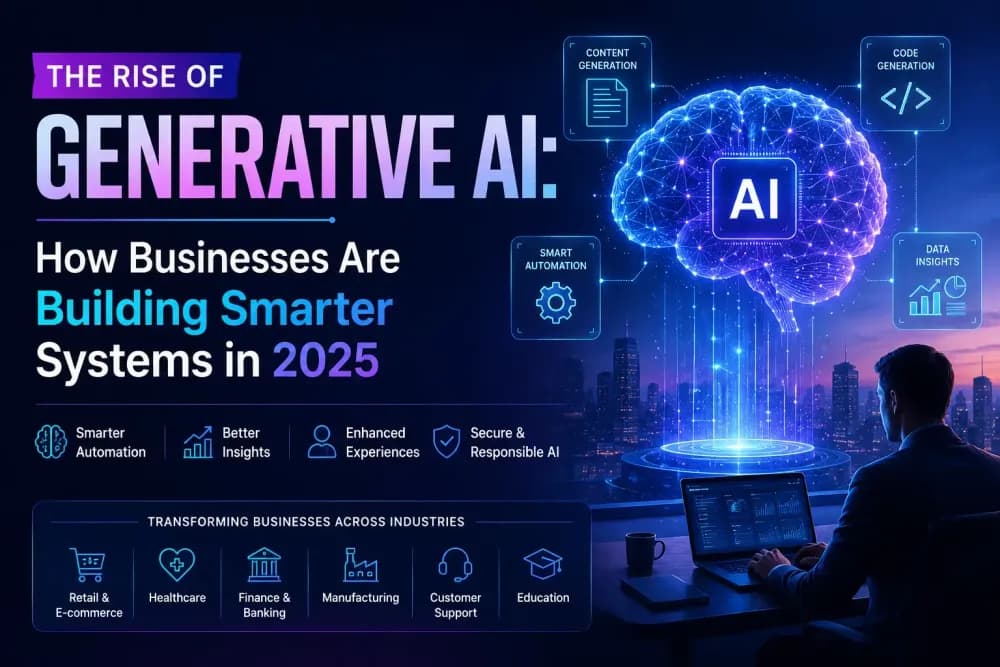
Generative AI has changed the way businesses think about software. In the past, automation mainly followed fixed rules. Today, AI can create text, summarize reports, generate code, and support customer conversations. This makes systems more flexible and more useful.
Businesses now want software that can respond to real needs. They want tools that can learn from data and support better decisions. As a result, AI is moving beyond experiments. It is becoming part of daily operations across many industries.
How Generative AI Creates Smarter Software
Sustainability is no longer a side project. It has become a core business priority. Customers want responsible brands. Investors also expect companies to manage environmental risks. Therefore, IT leaders must rethink how they build and operate digital infrastructure.
This is where enterprise AI solutions and AI software development services can add real value. They help businesses improve energy use, reduce system waste, and make better infrastructure decisions. In short, greener operations can support both the planet and long-term business growth.
Natural Language Makes Software Easier to Use
Traditional software often requires users to learn menus, filters, and complex settings. Generative AI changes this experience. Users can ask questions in plain language. The system can then provide summaries, answers, or useful next steps.
For example, a manager can ask for a sales summary instead of reviewing multiple dashboards. A support agent can request a quick overview of a customer’s history. This makes software easier to use. It also helps non-technical teams access information faster.
AI Helps Systems Respond to Context
Smart systems do more than process commands. They consider context. Generative AI can understand the tone of a customer message, the subject of a document, or the purpose of a request. It can then create a more relevant response.
This can improve many business processes. A support tool can draft a helpful reply. A content platform can prepare a first version of an article. A reporting system can explain changes in simple language. Therefore, AI can make software feel more natural and more useful.
Generative AI Is Improving Business Operations
Faster Workflows Reduce Daily Pressure
Many teams spend hours on repeated tasks. They write emails, prepare reports, review documents, and update records. Generative AI can help reduce this workload. It can create first drafts, summarize long files, and organize information.
As a result, employees can spend more time on work that needs judgment. They can focus on customers, strategy, and problem solving. This does not mean AI replaces people. Instead, it helps people work with more focus and less pressure.
Better Insights Support Better Decisions
Businesses collect large amounts of information. However, useful insights can stay hidden in reports, spreadsheets, and internal systems. Generative AI can turn this information into clear summaries. It can also identify patterns that deserve attention.
For example, a business can use AI to summarize customer feedback. It can highlight common complaints or changing preferences. Leaders can then act faster. With the right enterprise AI solutions, companies can make better use of the data they already have.
Building Better Customer Experiences With AI
Personalization Can Feel More Helpful
Customers expect relevant experiences. They do not want to search through pages of unnecessary information. Generative AI can help businesses create content, offers, and recommendations that match customer needs. This can make digital journeys feel more useful.
For instance, an online store can create better product descriptions. A travel platform can suggest ideas based on a user’s interests. A learning platform can adapt content to a learner’s progress. When done responsibly, personalization can improve trust and engagement.
Customer Support Can Become More Responsive
Customer service teams often deal with large volumes of questions. Generative AI can help them respond faster. It can suggest replies, summarize previous messages, and route requests to the right department. This reduces wait times for customers.
However, people still matter in customer support. Complex concerns often need empathy and judgment. Businesses should use AI to handle routine work first. Then, human teams can focus on sensitive or complicated cases. This creates a service experience that feels both fast and personal.
Generative AI Is Supporting Developers
Code Assistance Speeds Up Development
Developers spend time writing repeated code, checking errors, and reviewing documentation. Generative AI can support these tasks. It can suggest code, explain functions, and create basic test cases. This helps teams build faster.
Still, developers should review every output. AI can make mistakes. It can also miss important project context. Skilled developers remain responsible for quality, security, and performance. AI works best as a practical assistant, not as a replacement for technical expertise.
Documentation Becomes Easier to Maintain
Clear documentation helps software teams work smoothly. Yet it often gets delayed when projects move quickly. Generative AI can help create technical guides, code comments, and release notes. It can also turn complex notes into simple explanations.
This supports stronger collaboration. New team members can understand systems faster. Product teams can explain updates more clearly. With reliable AI software development services, businesses can build development workflows that improve speed while protecting quality.
Enterprise AI Needs Security and Governance
Data Privacy Must Come First
Generative AI often works with sensitive information. This may include customer data, internal documents, financial records, or source code. Businesses must protect this information. They should control access and avoid sharing confidential data with unapproved tools.
Privacy should shape the system from the start. Teams should collect only the data they need. They should also define how long information will be stored. Clear policies reduce risk and help customers feel more confident.
Human Review Keeps Systems Responsible
Generative AI can create useful outputs. However, it can also produce incorrect or unsuitable results. This is why human review remains important. Teams should check AI-generated content before using it in high-impact situations.
Human oversight matters in finance, healthcare, legal services, and customer communications. Employees can catch mistakes that automated systems may miss. Responsible enterprise AI solutions include clear review steps, testing processes, and accountability rules.
Real World Industries Are Adopting Generative AI
Healthcare Is Improving Communication and Workflows
Healthcare teams manage appointments, records, reports, and patient communication. Generative AI can help summarize notes and prepare follow-up messages. It can also help staff find useful information more quickly. This can reduce pressure on busy teams.
However, AI should support medical professionals, not replace them. Doctors and care teams must remain responsible for patient decisions. The goal is to reduce administrative burden. This gives healthcare teams more time to focus on people.
Finance Is Building Faster and Safer Services
Financial businesses handle large volumes of information every day. Generative AI can help summarize reports, support customer queries, and prepare internal documents. It can also help employees understand market activity and financial trends.
At the same time, financial systems require strong controls. Companies must protect customer information and monitor AI outputs carefully. With secure AI software development services, businesses can create tools that support speed without weakening trust.
FAQs
What is generative AI?
Generative AI is a type of artificial intelligence that creates new content. It can generate text, images, code, summaries, audio, and other outputs based on patterns in data.
How can generative AI help businesses?
It can improve customer support, automate routine work, summarize information, support developers, and create more personalized digital experiences.
Can generative AI replace employees?
Generative AI can automate repetitive tasks. However, it cannot replace human judgment, empathy, creativity, and leadership. It works best when it supports people.
What are the risks of generative AI?
Common risks include inaccurate outputs, data privacy concerns, weak security controls, and overreliance on automation. Human review and clear governance can reduce these risks.
Why do businesses need AI software development services?
AI software development services help businesses build secure, tailored, and scalable AI tools. They connect AI with real workflows, business data, and long-term growth plans.
Conclusion
Generative AI is helping businesses create smarter systems in 2026. It can make software easier to use, improve workflows, and support better customer experiences. It can also give teams faster access to useful information.
The strongest results come from thoughtful adoption. Businesses need clear goals, secure data practices, and human oversight. By using enterprise AI solutions and AI software development services, organizations can build smarter systems that support people, improve performance, and create long-term value.