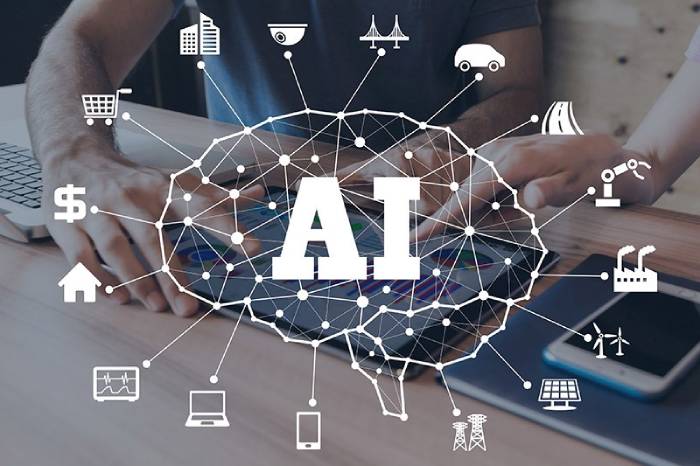
AI Is Already at Work Around You
Artificial intelligence is no longer experimental. It is practical, proven, and widely adopted. Every time a customer gets a product recommendation, receives instant support, or sees a personalized offer, AI is working behind the scenes.
Today, businesses across industries rely on data to compete. However, data alone is not enough. Companies need intelligence. This is where artificial intelligence in business examples becomes important. They show how AI turns information into action.
From startups to global enterprises, organizations now depend on AI for business to operate faster, smarter, and more efficiently.
Understanding Artificial Intelligence in Business
Artificial intelligence in business refers to using smart systems that learn from data, recognize patterns, and support or automate decisions. These systems improve accuracy and speed while reducing manual effort.
The role of artificial intelligence in business is not to replace people. Instead, it helps teams focus on high-value work. AI handles repetitive tasks, analyzes large datasets, and delivers insights humans cannot process at scale.
This usage of artificial intelligence in business continues to grow as tools become more accessible and affordable.
How Do Businesses Use Artificial Intelligence?
To understand how businesses use artificial intelligence, it helps to look at real use cases rather than theory.
Businesses use AI to:
- Analyze customer behavior
- Predict future demand
- Automate customer support
- Optimize pricing and inventory
- Improve decision-making
These uses of AI in business vary by industry, but the goal remains the same: better outcomes with less effort.
Artificial Intelligence in Retail and E-Commerce
Retail is one of the earliest adopters of AI. Customer data plays a major role in success.
AI helps retailers personalize shopping experiences. Recommendation engines suggest products based on browsing and purchase history. Pricing algorithms adjust prices in real time.
Retailers also use AI to forecast demand and manage inventory. This reduces overstock and stockouts. These are practical AI uses in business that directly increase revenue and customer satisfaction.
Artificial Intelligence in Banking and Finance
Banks and financial institutions rely heavily on accuracy and security. AI helps meet both needs.
AI systems detect fraudulent transactions instantly. Credit scoring models assess risk more fairly. Chatbots assist customers with balance inquiries and transaction support.
These artificial intelligence in business examples reduce human error, improve compliance, and enhance trust.
Artificial Intelligence in Healthcare
Healthcare organizations use AI to support doctors, nurses, and administrators.
AI analyzes medical images to detect diseases earlier. Predictive models help hospitals manage patient flow. Virtual assistants remind patients about medications and appointments.
Although humans make final decisions, AI technology for business in healthcare improves outcomes and saves lives.
Artificial Intelligence in Manufacturing
Manufacturing depends on efficiency and reliability. AI plays a critical role here.
Predictive maintenance systems detect equipment issues before breakdowns occur. AI-powered robots assist with assembly. Quality control systems identify defects instantly.
These uses of AI in business reduce downtime, improve safety, and lower operational costs.
Artificial Intelligence in Marketing and Sales
Marketing teams use AI to understand audiences better. AI analyzes customer behavior, campaign performance, and engagement patterns.
AI tools optimize ad targeting, personalize emails, and predict which leads are most likely to convert. Sales teams use AI to forecast revenue and prioritize prospects.
These artificial intelligence in business examples help teams spend budgets wisely and close deals faster.
Artificial Intelligence in Customer Service
Customer service has transformed dramatically with AI.
AI-powered chatbots handle routine queries instantly. Voice assistants resolve basic issues. Ticket-routing systems assign complex cases to the right agents.
This form of AI technology for business improves response times while maintaining human support where needed.
Artificial Intelligence in Human Resources
HR departments manage people, data, and performance. AI supports all three.
AI screens resumes faster and more fairly. Predictive analytics identify employee attrition risks. Learning platforms recommend personalized training.
These AI uses in business help HR teams make informed decisions and improve employee experience.
Artificial Intelligence in Logistics and Supply Chain
Supply chains are complex and sensitive to disruption. AI adds visibility and control.
AI forecasts demand, optimizes routes, and monitors supplier performance. Logistics companies use AI to reduce delays and fuel costs.
This usage of artificial intelligence in business ensures smoother operations and better planning.
10 Examples of Artificial Intelligence in Business
Here are 10 examples of artificial intelligence in business used across industries today:
- Chatbots for customer support
- Recommendation engines in eCommerce
- Fraud detection in banking
- Medical image analysis in healthcare
- Predictive maintenance in manufacturing
- AI-driven ad targeting
- Resume screening in HR
- Inventory forecasting in retail
- Route optimization in logistics
- Sentiment analysis on social media
Each example highlights the growing role of artificial intelligence in business.
Benefits of AI Across Industries
AI adoption delivers clear advantages regardless of industry.
Businesses benefit from:
- Faster decision-making
- Improved accuracy
- Lower operational costs
- Better customer experiences
- Scalable systems
These benefits explain why AI for business is now a strategic priority.
Challenges Businesses Face with AI
Despite its benefits, AI adoption has challenges.
Common issues include data quality problems, lack of skilled teams, and ethical concerns. Businesses must also ensure transparency and accountability.
Responsible implementation is key to long-term success.
Best Practices for Implementing AI
To succeed with AI, businesses should:
- Start with clear goals
- Use high-quality data
- Combine AI insights with human judgment
- Monitor performance continuously
For customized solutions, many companies work with professional AI development services. For best results, businesses often choose JBS For Best Solution to align AI systems with real operational needs.
The Growing Role of AI Across Industries
AI is no longer industry-specific. It is universal.
As tools become more accessible, even small businesses benefit. AI shifts from automation to intelligence, from support to strategy.
The role of artificial intelligence in business will only expand as organizations seek agility and resilience.
Conclusion: AI Is Transforming Every Industry
Artificial intelligence is not limited to tech companies. It is reshaping retail, finance, healthcare, manufacturing, marketing, and beyond.
These artificial intelligence in business examples prove that AI delivers real value today. Businesses that embrace AI thoughtfully will stay competitive, innovative, and customer-focused in the years ahead.
AI is not the future anymore. It is the present, and it is already changing how every industry works.